Why Pro Paddlers Are Secretly Switching to Inflatables
Reasons why professional paddlers are switching to inflatables. For one easy to travel with
PADDLEBOARDS
2/16/20264 min read
Why Pro Paddlers Are Secretly Switching to Inflatables?
Walk into any high-end paddleboard shop, and you'll see walls lined with sleek, hard-shell SUPs. Talk to the staff, and they'll likely steer you toward these rigid boards as the "serious" option. But but here's the thing I've been noticing: professional paddlers are quietly adding inflatable SUPs to their quiver—and some are making the switch entirely.
I first noticed this shift at a regional race last summer. Among the expected fleet of carbon fiber racing boards, I spotted three pros warming up on inflatables. When I asked about it, the responses were surprisingly candid: "Don't tell my sponsor, but I train on my inflatable more than my hard board these days."
So why are they making this switch?
The Performance Gap Has Disappeared
Five years ago, the difference between inflatable and hard paddleboards was night and day. Inflatables were slower, less responsive, and felt mushy under your feet. Today's high-end inflatable SUPs are built with military-grade PVC, fusion technology, and dual-layer construction that creates a rigidity that rivals traditional boards.
Sarah Chen, who's been paddling professionally for years, told me: "I can't tell the difference anymore when I'm on the water. My inflatable tracks just as well, holds speed through chop, and responds to my paddle strokes exactly how I need it to."
It all comes down to air pressure, really. Modern inflatables inflate to 15-20 PSI, creating a board that's rock-solid underfoot. The flex that once plagued early models has been engineered out through better materials and smarter design.
Travel Without the Headache
If you're competing all over the place, traveling with a hard board is honestly a nightmare. Oversized baggage fees can run $200-$400 per flight. Boards get damaged in transit. And try dragging a 12-foot board through the airport at 5 AM - everyone's staring at you like you're nuts.
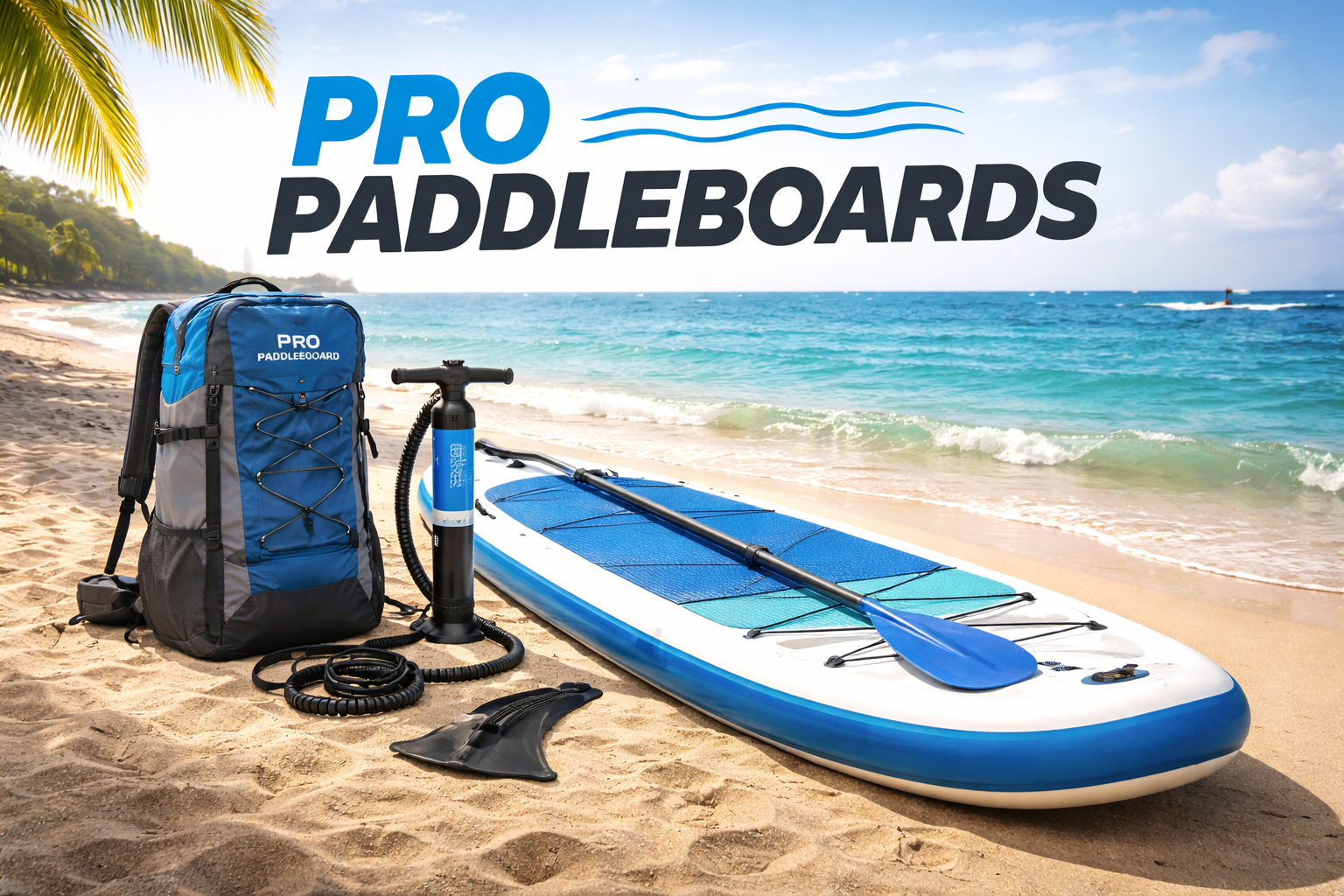
"I spent more time worrying about my board in transit than I did about the actual competition," admits three-time champion Marcus Rodriguez. "Switching to an inflatable saved me thousands in baggage fees and eliminated the anxiety completely. My board fits in a backpack. I check it as regular luggage. Done."
And it's not just about competitions either. Pros who teach clinics, attend demos, or explore new waterways appreciate being able to throw a board in the car without roof racks, straps, or playing Tetris with all your gear.
Versatility for Cross-Training
The modern professional paddler isn't just racing or touring. They're teaching, creating content, exploring backcountry waterways, and constantly seeking new challenges. Hard boards excel in specific conditions, but inflatables adapt.
"I use my inflatable for everything except actual race day," explains expedition paddler Jamie Oakes. "River running, surf, teaching beginners, camping trips where I hike into remote lakes—the inflatable handles it all. My hard boards sit in the garage most of the year now."
This versatility matters because durability follows suit. Drop an inflatable on rocks? It bounces. Scrape it along a shallow riverbed? No problem. That $3,000 carbon fiber racing board? One wrong move and you're looking at expensive repairs or replacement.
The Dirty Secret About Sponsorships
Here's where it gets interesting. Many professional paddlers are contractually obligated to use and promote specific hard board brands. They show up to competitions with the required equipment, take the sponsored photos, and post the Instagram content their contracts demand.
But on their own time? Different story.
"My sponsor sends me beautiful hard boards every season," one anonymous pro shared. "I display them, I race on them, and I genuinely appreciate the support. But when I'm actually training or just paddling for fun? I grab my inflatable nine times out of ten. It's just more practical for my actual life."
This creates an odd disconnect between what the industry markets and what professionals actually use day-to-day. The perception remains that serious paddlers need hard boards, while the reality is increasingly nuanced.
The Environmental Angle
Look, it's not the main reason, but here's something interesting: a bunch of pros I've talked to actually factor in the environmental stuff when they're choosing gear. Making those rigid boards takes a ton of resources - all those toxic resins and materials that'll never break down. Shipping them globally adds considerable carbon footprint.
Quality inflatables last 5-10 years with proper care, they're easier to repair, and their transportation footprint is minimal. If you're a pro trying to build a brand around being outdoorsy and eco-friendly, this stuff actually matters to your image.
What This Means for the Rest of Us
If professionals—people whose performance and reputation depend on equipment choices—are increasingly choosing inflatables, what does that tell recreational paddlers?
Honestly? I think we've all been buying into some marketing BS. This whole idea that rigid boards are automatically better and inflatables are just for newbies? That's old-school marketing talking, not what's actually happening.
This doesn't mean hard boards are obsolete. Race-specific boards still offer marginal advantages in competition. Dedicated surf SUPs have characteristics some riders prefer. But for the vast majority of paddling—including the paddling that professionals actually do most often—today's inflatables are just as good - sometimes better.
The Future Is Flexible
The industry's finally starting to catch up to what the pros already know. Higher-end inflatable options are proliferating. Technology continues improving. And the stigma around inflatable SUPs is fading as performance speaks for itself.
"In five years, I think we'll look back and wonder why we ever thought hard boards were the default choice," predicts industry analyst Tom Brennan. "Inflatables solve too many problems and match the performance for too many use cases. The holdouts are mostly ego and tradition at this point."
The next time someone tells you that serious paddlers don't use inflatables, ask them when they last talked to a pro about what's actually in their garage. You might be surprised by the answer.
The secret's out: the future of paddleboarding is inflatable. The pros have known it for a while. Now it's everyone else's turn to catch up.