Inflatable vs. Hard Board: The Showdown Everyone’s Sharing
PADDLEBOARDS
1/16/20267 min read
Inflatable vs. Hard Board: The Showdown Everyone’s Sharing
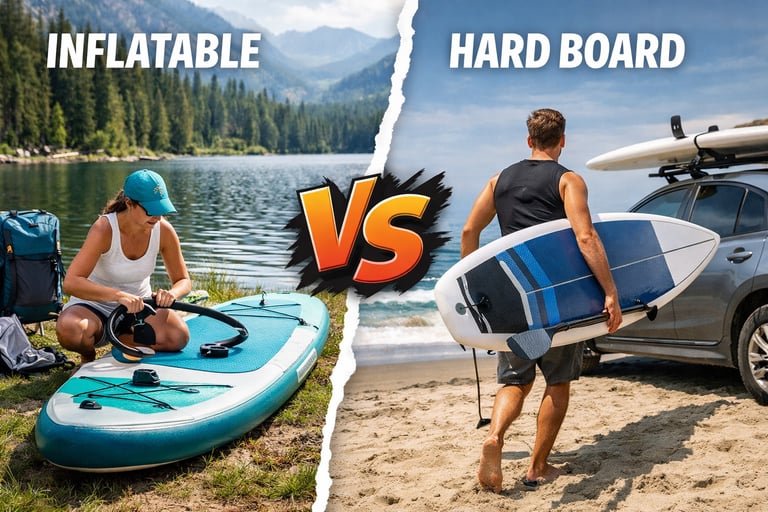
If you’ve scrolled paddleboard TikTok lately, you’ve seen it: the eternal clash of inflatable SUPs (iSUPs) vs. hard boards. One side swears by suitcase-sized convenience; the other flexes sleek speed and razor-sharp turns. Who’s right? Honestly—both. The better question is: what’s right for you and where you paddle most?
This guide is your no-fluff decision maker. We’ll compare performance, portability, storage, durability, safety, cost, and real-world use cases (yoga, touring, whitewater, surf, fishing). By the end, you’ll know exactly which board to buy—and what to skip.
TL;DR (The 30-Second Verdict)
Choose Inflatable if you care most about convenience, small storage, car-trunk living, travel, durability against dings, kid/pet-friendly fun, and mellow-to-moderate conditions.
Choose Hard Board if you want the crispest glide, fastest touring speed, best carving in surf, and high-precision control—and you have storage/transport solved.
Quick Specs Snapshot
Category Inflatable SUP (iSUP)Hard Board (Epoxy/Fiberglass)Weight~17–25 lb (board only)~20–30 lb (varies with length)Setup5–10 min inflate (hand) or 1–2 min (electric)None (grab and go)Storage Fits in closet/trunk Needs garage/rack Durability Excellent against knocks/shore dingsCan chip/ding if hit Performance Stable; good for most paddlers Best glide and edge control Travel Fly-friendly backpack bag Oversize transport challenges Cost Range Wide (value to premium)Wide (value to premium)Repair Patchable PVC Requires epoxy repair skills Safety Softer if you fall on it Hard shell requires awareness
Performance Showdown
1) Glide & Speed
Hard boards win pure glide. The rigid shell cuts cleanly, keeps momentum, and rewards good technique. Touring and downwinding feel smoother with less effort.
Inflatables have improved a ton. High-PSI drop-stitch and stiffening features (e.g., carbon rails, stringers) narrow the gap—but head-to-head, hard boards still feel “livelier” and more efficient.
Who feels it: Intermediate/advanced paddlers, long distances, choppy or windy bays where tracking matters.
2) Stability & Flex
Inflatables tend to be thicker (often 6") and forgiving, with a subtle “give” that absorbs small chop. Great for beginners, yoga, and casual cruising.
Hard boards are stable when sized correctly, but you’ll feel surface texture and micro-chop more directly—nice for feedback, less comfy for shaky legs.
Winner: For confidence and comfort, iSUP. For feedback and precision, hard.
3) Maneuverability & Carving
Hard boards shine in turns. In surf or tight carving, they engage the rail better.
Inflatables turn fine for all-around paddling, but pivot turns and surf snaps feel a bit “rounder.”
Winner: Hard board, especially in surf.
4) Tracking (Straight-Line)
Hard boards typically track slightly better due to shapes and edges.
Inflatables track well with the right fin setup (center + side bites for some models). Upgrading the fin can help a lot.
Winner: Slight edge to hard, but fin upgrades can close the gap.
Portability, Storage & Setup
1) Transport
Inflatables: Toss in the trunk, Uber to the lake, carry on your back to remote put-ins. Airport travel is dramatically easier with an iSUP bag.
Hard boards: Simple roof rack or truck bed works, but apartments and rideshares complicate life. Air travel gets expensive.
2) Storage
Inflatables: Closet-friendly. They also free up garage space for, you know, actual life.
Hard boards: Prefer racks, wall mounts, or garages. They’re basically long, pretty roommates.
3) Setup Time
Hard board: No inflation—arrive, paddle.
Inflatables: Electric pump = 1–2 minutes of machine time; hand pump = 5–10 minutes and a light warm-up workout.
Durability, Maintenance & Repair
1) Durability in the Wild
Inflatables: Surprisingly tough. Bounce off docks, rocks, and boat ramps with fewer tears. Ideal for kids/pets and river scrapes.
Hard boards: More likely to chip/ding if you kiss concrete or rock. Treat them like the sports cars they are.
2) Sun, Salt & Storage
Both types appreciate rinse-offs and shade.
Inflatables: Don’t bake them fully inflated in a hot car; PSI rises.
Hard boards: Avoid hard knocks; use board bags for transport/storage.
3) Repair
Inflatables: Patch kits are simple for pinholes or small scuffs.
Hard boards: Dings need epoxy repair (DIY if you’re handy or a quick stop at the local surf/SUP shop).
Result: For carefree ownership, iSUP. For pride-of-craft performance, hard.
Safety & Comfort
Inflatables: Soft landings if you fall. Less intimidating for kids and dogs.
Hard boards: Not dangerous when used correctly, but a hard edge is a hard edge—practice control and wear a leash/PFD.
Comfort factor: Inflatables feel like standing on a slightly cushioned mat. Hard boards are firmer underfoot—some love that “connected to the water” feel.
Cost & Value
Both categories span from budget to premium. What truly matters is construction quality, brand reliability, and the right shape for your weight + water conditions.
Inflatables: Great value at the mid-range; premium iSUPs can match high-end expectations (and price).
Hard boards: Premium performance commands premium build cost and accessories (board bag, rack, etc.).
Buyer tip: Don’t choose the cheapest bundle; choose the right stiffness + fin setup + accessories. “Buy once, cry once” beats constant upgrades.
Use-Case Guide (Pick Your Paddler)
All-Around Recreational
Go Inflatable if you want weekend fun, easy storage, family/pet paddling, and the occasional mellow river.
Go Hard if you want a slightly snappier feel and you have easy storage.
Recommended shapes: 10’6"–11’ all-around shapes, 32–34" wide.
Fitness & Touring (Lakes, Bays, Calm Coast)
Go Hard if speed, straight tracking, and efficiency are top priorities.
Go Inflatable if you’re traveling often, hiking to alpine lakes, or juggling apartment life.
Recommended shapes: 11’–14’ touring shapes; narrower widths (28–32") for speed.
Yoga & Chill Sessions
Inflatable wins. Cushioned deck, stable platform, less “buzzy” feedback.
Board features: Wider deck (32–34"+), soft pad, center carry handle that lies flat.
Fishing & Gear Hauling
Inflatable typically wins for load capacity and deck space; also less stress around hooks/dings.
Look for: Multiple tie-downs, mounts, and a stable width.
Whitewater / Rivers (Class I–II+)
Inflatable wins for impact resistance and safety; consider helmets and quick-release waist leashes in flowing water.
Features: Robust rails, reinforced seams, grippy deck.
Surf (Ocean Waves)
Hard board wins for carving, responsiveness, and classic surf feel.
Inflatable can catch waves, but expect softer, less incisive turns.
Real-World Scenarios (Decide in 10 Seconds)
Apartment dweller with hatchback, wants weekend lake paddles → Inflatable.
Suburban garage + easy roof rack, obsessed with speed on big lakes → Hard board.
Family with kids + golden retriever, mixed rivers/lakes → Inflatable.
Travel often, dream of alpine lakes and flights to Hawaii → Inflatable.
Coastal paddler who wants to surf and tour in one quiver → Consider a hard board surf shape + inflatable touring as a two-board solution (if budget allows).
The Anatomy of a Good Inflatable (How to Spot Quality)
Stiffness at Recommended PSI: Look for 12–20 PSI max ratings; stiffer boards flex less under load.
Drop-Stitch Density: Higher density = better rigidity.
Reinforced Rails / Stringers: Carbon or extra PVC layers reduce “taco” flex.
Fin System: US-box center fin (upgrade-friendly) + side bites for tracking.
Accessories: Dual-action pump or 12V electric pump, comfortable backpack, real repair kit (not just stickers).
The Anatomy of a Good Hard Board
Shape Matters: Touring nose for distance, all-around for versatility, surf shape for waves.
Build Quality: Solid lamination, consistent rails, and a well-designed deck pad.
Fin System: US-box center fin; swap for different conditions.
Board Bag: Protect your investment—add a bag to your recommendation list.
PSI, Leashes & PFDs (Non-Negotiables)
PSI: Inflate to the board’s recommended PSI (often 12–15 PSI; premium boards may allow higher). Under-inflation = sluggish, flexy ride.
Leash: Flat water = coiled ankle leash. Flowing rivers = quick-release waist leash (safety first).
PFD: Many areas require a USCG-approved PFD and a whistle. Make safety look cool
Maintenance Cheat Sheet
Inflatables
Rinse after saltwater; dry before rolling.
Don’t store fully inflated in hot cars.
Patch pinholes with included kit; check valves occasionally.
Hard Boards
Rinse + bag it.
Fix dings quickly to avoid water intrusion.
Use rail savers if you paddle near docks or have an expressive paddle stroke (no shade; we’ve all done it).
Budget Breakdown: Where to Spend vs. Save
Spend on: Stiffness (build quality), fin system, pump (your lungs will thank you), and a good paddle (lighter = happier shoulders).
Save on: Over-the-top bundles you won’t use, or gimmicks that add weight without function.
FAQs (That People Actually Ask)
Q: Are inflatables safe for dogs/kids?
A: Yes—soft deck + grippy pad = great for family days. Trim the dog’s nails before—and bring treats for morale.
Q: Will an inflatable feel flimsy?
A: Good ones don’t. If you’re at recommended PSI with solid rails, you’ll be shocked how rigid they feel.
Q: Can I surf on an inflatable?
A: You can catch waves, sure. But for true carving, a hard board wins.
Q: Can I store a hard board outside?
A: Shade and a board bag help, but UV is relentless. Indoors or covered is always better.
Q: One board to do it all?
A: All-around iSUP at 10’6"–11’ and ~32" width fits most humans, pets, and weekend plans. If your heart wants speed, touring shapes (hard or inflatable) are the upgrade.
Decision Flow (Bookmark-able)
Apartment/Travel Life?
Yes → Inflatable
No → 2
Primary Goal = Speed/Performance?
Yes → Hard board (touring or surf)
No → 3
Kids, Dogs, or Whitewater Curiosity?
Yes → Inflatable
No → Either (lean inflatable for convenience)
Still torn? Consider a two-board quiver later: inflatable for travel/family, hard board for performance days. Start with what removes friction now.
Final Take
Inflatables democratized paddleboarding—easy to own, easy to store, easy to love. Hard boards still rule peak performance—speed, carve, precision. There’s no wrong choice, only the wrong choice for your life. If convenience is the bottleneck, go inflatable and paddle more. If you have the room and crave glide, go hard and never look back.
Whichever route you choose: inflate (or rack) the board the night before, paddle at sunrise, and keep snacks handy. Better paddles beat better excuses—every single time.
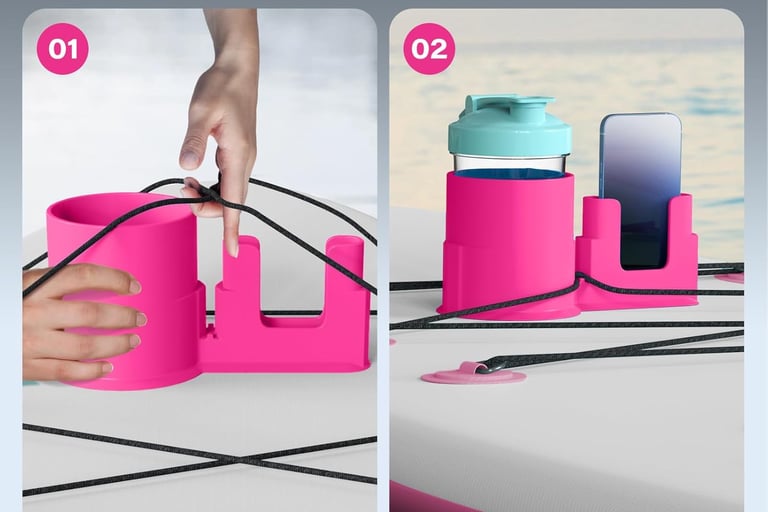
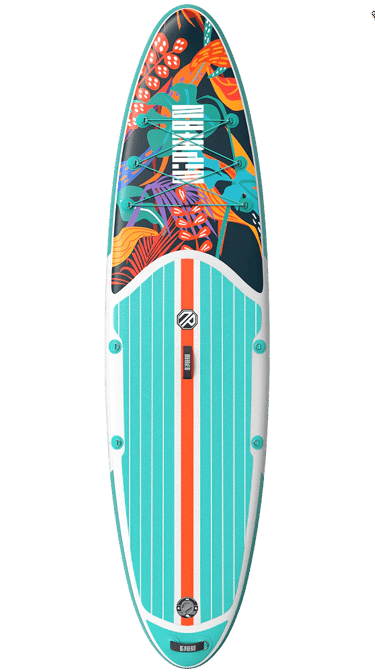
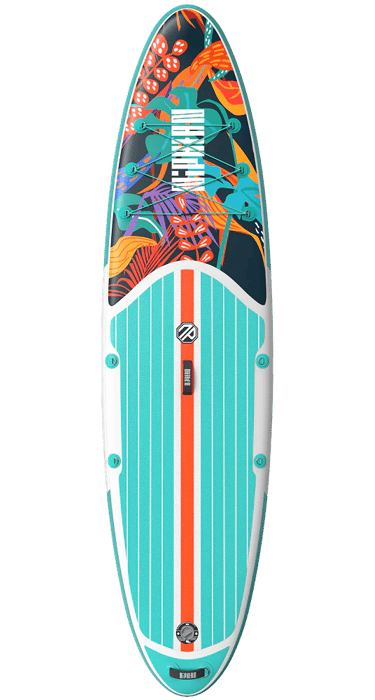
Niphean iSUP & Waterproof Dry Bag & Inflatable Kayak Seat
The 10'6" Classic SUP is lightweight and easy to maneuver, designed specifically for beginners and those who value portability while maintaining great performance.